Relaxing Yoga Asanas Checklist: 10–25 Min Stress Reset
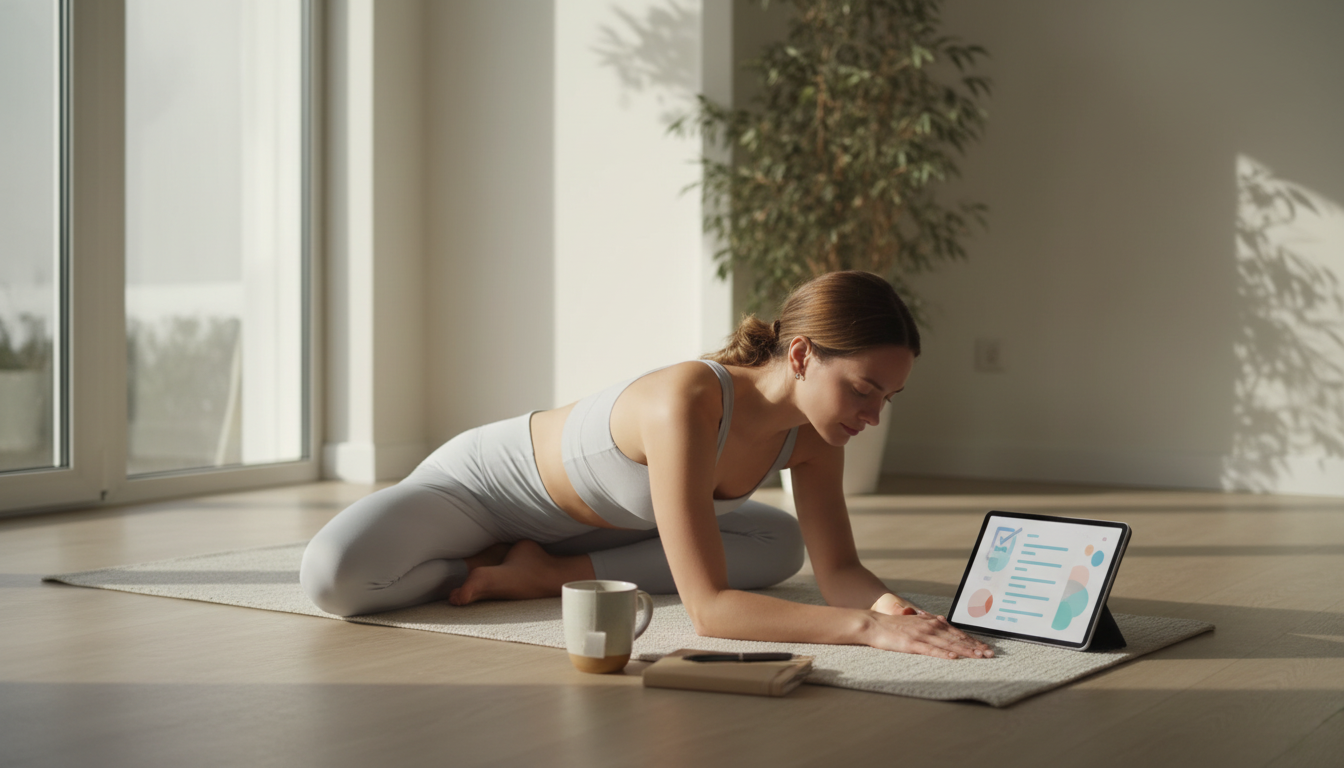
Ultimate Yoga Asanas Relaxation Checklist: A Simple Digital Routine for Stress Relief, Calm, and Mindful Living
A consistent relaxation practice doesn’t need to be complicated. A short sequence of calming yoga asanas, paired with breath and a brief wind-down ritual, can help release physical tension, settle the nervous system, and make space for clearer thinking. This guide lays out an easy checklist-style flow you can repeat anytime—after work, before bed, or during a midday reset—plus a downloadable eBook designed to keep the routine simple and repeatable.
What a relaxation checklist solves (and why it works)
When stress is high, the hardest part is often starting. A checklist approach removes the “what should I do today?” question and replaces it with a gentle, repeatable sequence.
- Reduces decision fatigue by turning practice into a repeatable sequence: set up, move, breathe, rest, reflect.
- Encourages consistency over intensity: short sessions done regularly can be more supportive than sporadic long sessions.
- Supports downshifting: longer exhales, slower transitions, and restorative shapes can cue a calmer state.
- Creates a boundary between “doing” and “resting,” especially useful after screens, commuting, or emotionally demanding days.
For a deeper look at yoga’s safety and potential benefits, see NCCIH: Yoga—What You Need To Know. For context on how stress affects the body, the American Psychological Association’s overview is a helpful reference.
Set the scene in 3 minutes: space, props, and a clear start
A calm session begins before the first pose. Keep the environment low-stimulation and make comfort the priority.
- Choose a low-stimulation spot: dim lights, reduce noise, silence notifications.
- Gather simple props: a folded blanket, pillow/bolster, and a strap or towel (optional).
- Use a gentle start cue: a single deep inhale through the nose and a slow exhale through the nose or pursed lips.
- Pick a time box: 10, 15, or 25 minutes; end with rest even if the movement portion is brief.
Quick setup checklist
| Item | Why it helps | Simple alternative |
|---|---|---|
| Blanket | Comfort for knees/hips; warmth supports relaxation | Towel or sweatshirt |
| Pillow or bolster | Supports restorative shapes without strain | Couch cushion |
| Timer | Prevents clock-checking; helps fully rest | Phone in airplane mode |
| Water | Hydration after gentle movement | Herbal tea (caffeine-free) |
The calming asanas flow: a checklist-style sequence
Move slowly enough that breathing stays smooth. Transitions are part of the practice—take your time getting in and out of each shape.
- Arrive (1–2 minutes): Comfortable seat or constructive rest; notice jaw, shoulders, and belly.
- Gentle warm-up (2–4 minutes): Neck rolls, shoulder circles, cat-cow, slow side bends—move with the breath.
- Hip and back release (4–8 minutes): Child’s Pose (supported), low lunge (easy), seated forward fold (soft knees).
- Twists and unwinding (2–5 minutes): Supine twist on each side; keep shoulders heavy and breath smooth.
- Legs-up support (2–8 minutes): Legs-up-the-wall or calves on a chair; soften the belly and lengthen exhales.
- Final rest (2–8 minutes): Savasana or supported rest; aim for stillness and warmth rather than “perfect” posture.
Relaxation flow options by time available
| Time | Sequence focus | Suggested holds |
|---|---|---|
| 10 minutes | Minimum effective reset | Child’s Pose 2 min; Supine twist 1 min/side; Legs-up 3 min; Rest 2 min |
| 15 minutes | Balanced unwind | Warm-up 3 min; Forward fold 3 min; Twist 1–2 min/side; Legs-up 3–4 min; Rest 2–3 min |
| 25 minutes | Deep downshift | Warm-up 5 min; Hip/back release 8 min; Twist 2 min/side; Legs-up 6 min; Rest 4 min |
Breath cues that pair well with relaxation practice
Breathwork doesn’t need to be intense to be effective. Think “soothing,” not “pushing.”
- Lengthen the exhale: try inhaling for 4 counts and exhaling for 6 counts for 2–5 minutes.
- Keep it quiet and smooth: avoid forcing breath depth; comfort is the priority.
- Add a gentle pause only if it feels easy: a 1-count pause after exhale can reinforce steadiness.
- If dizziness or anxiety increases, return to normal breathing and reduce holds or intensity.
If sleep is the goal, pairing slow exhales with a consistent wind-down can be especially supportive; see the Sleep Foundation’s relaxation techniques for additional ideas you can layer in.
Common tension patterns and simple adjustments
Relaxation is easier when the body feels safely supported. Small changes often make the biggest difference.
Make it stick: a weekly rhythm for calm and mindful living
Simple 7-day plan
| Day | Time target | Focus |
|---|---|---|
| Mon | 10–15 min | Reset after work |
| Tue | 10 min | Neck/shoulders release + rest |
| Wed | 15 min | Hips + gentle twist |
| Thu | 10 min | Legs-up + breath |
| Fri | 15 min | Full checklist flow |
| Sat | 20–30 min | Longer holds + extended rest |
| Sun | 10 min | Light session + reflection |
Digital download guide: what’s inside and how to use it
For a simple, structured routine, see
The Ultimate Yoga Asanas Relaxation Checklist (digital download eBook).
If mental clutter from devices is part of what keeps your system “on,” pair your physical wind-down with
Digital Declutter Checklist: Free Your Mind, One Click at a Time
for a calmer digital environment.
FAQ
Is this relaxation checklist suitable for beginners?
Yes. Stick to gentle, supported versions of each pose, choose the 10- or 15-minute option, and prioritize comfort over depth. If anything causes pain (not just mild stretching), stop and consider checking with a qualified professional.
How often should the routine be done for noticeable stress relief?
Many people feel lighter right after a single session, especially with longer exhales and a real final rest. For more reliable, noticeable stress relief, aim for about 3–5 sessions per week for several weeks.
Can the checklist be used before bed?
Yes. Keep lighting low, avoid screens right beforehand, use supported shapes with minimal transitions, and extend the final rest. Emphasize longer exhales and choose calming holds rather than anything effortful.










Leave a comment